
What is HoLEP?
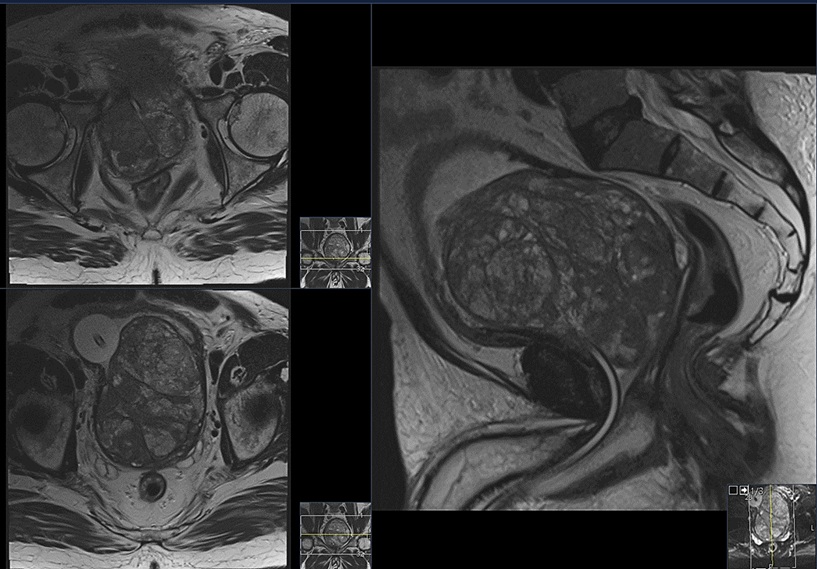
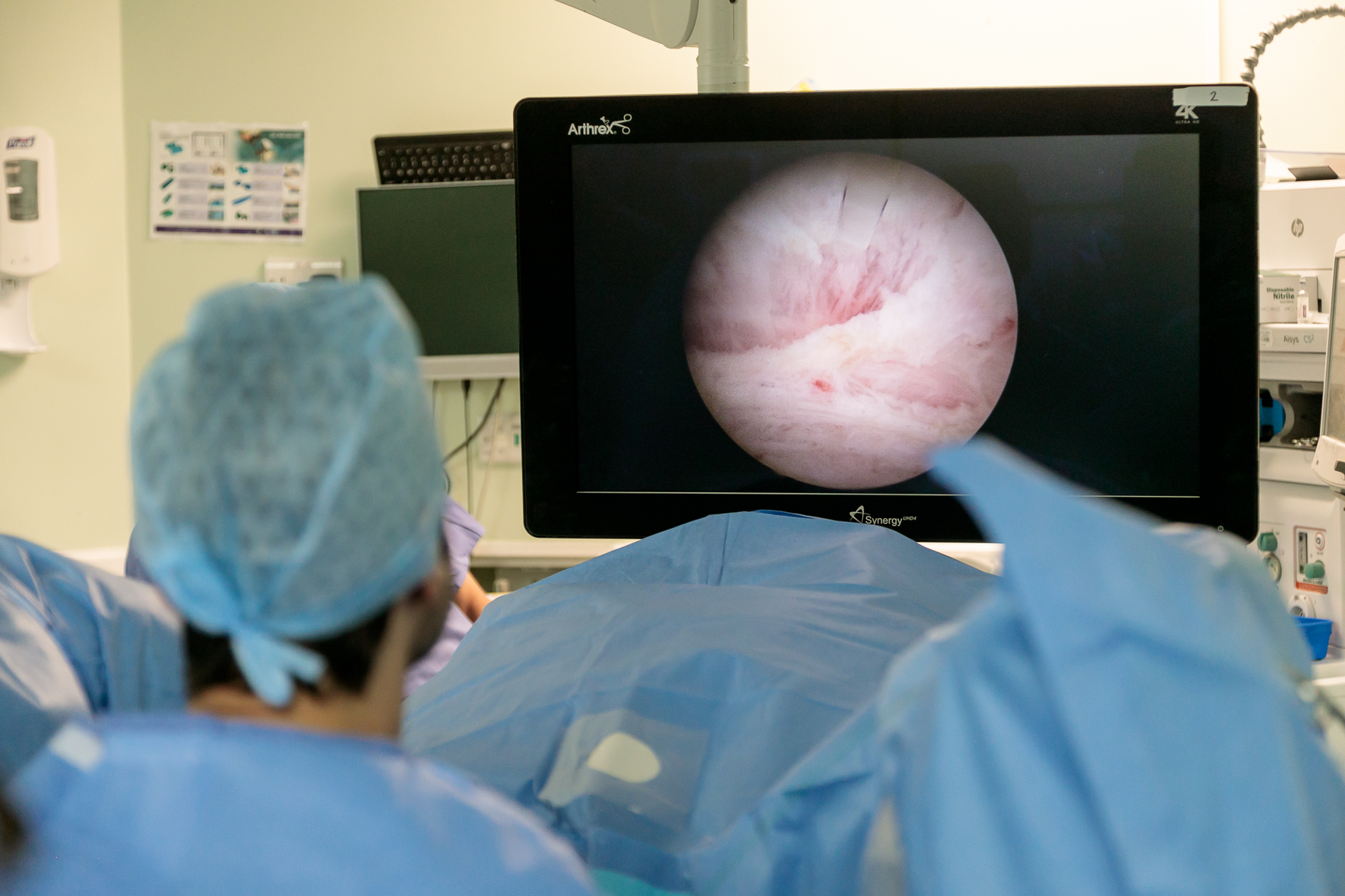
Holmium Laser Enucleation of the Prostate (HoLEP) is a minimally invasive endoscopic operation to treat a symptomatic enlarged prostate gland (benign prostatic hyperplasia, or BPH). A fine telescope is passed through the urethra — no skin incisions are made — and a holmium laser is used to separate the obstructing inner portion of the prostate (the adenoma) cleanly from its outer capsule, in the same anatomical plane that open prostatectomy used historically.
The enucleated tissue is then drawn back into the bladder and a second instrument (a morcellator) reduces it to small pieces that are washed out. Because the tissue is removed intact rather than vaporised, it can be sent to the pathology laboratory for analysis.
Dr Hadjipavlou uses the Boston Scientific / Lumenis 100W Moses laser system — a pulsed-delivery technology that optimises energy transfer to tissue and reduces fluid absorption during the procedure.
The result is a widely patent channel through which urine flows freely — functionally equivalent to open prostatectomy, achieved endoscopically.
Who is HoLEP suitable for?
HoLEP is performed for men with symptomatic BPH who have not responded sufficiently to medication, or who prefer a definitive surgical solution. It is particularly well suited to men with:
- Prostate glands of any size, including very large glands (>80 g, >100 g, or larger) where other endoscopic techniques are not straightforward
- Retention of urine requiring a long-term catheter
- Recurrent urinary tract infections related to incomplete bladder emptying
- Bladder stones caused by chronic retention
- Renal impairment related to high-pressure obstruction
- A preference to avoid long-term medication
Men who wish to preserve ejaculatory function should discuss the high rate of retrograde ejaculation associated with HoLEP (and indeed with all anatomical surgical treatments for BPH) before deciding on treatment. For such men, UroLift® or Rezūm® may be worth considering, depending on prostate characteristics.
What to expect: before, during, and after
Before the procedure
Pre-operative assessment includes a urine flow rate measurement, post-void residual ultrasound, and blood tests. If you take blood-thinning medication, specific guidance will be given about when to pause it. An anaesthetic assessment will be arranged.
During the procedure
HoLEP is performed under general or spinal anaesthesia. The operation typically takes approximately 60 minutes. A urinary catheter is placed at the end of the procedure.
After the procedure
You will wake with a urinary catheter in place. There is commonly some blood in the urine for the first 24–48 hours, which settles. The catheter is typically removed the morning after surgery, after which voiding is confirmed before discharge. Most patients are home within one to two days.
In the weeks following surgery, some urgency and frequency of urination is common as the bladder adjusts to its new outflow. These symptoms generally resolve over 4–8 weeks. Full symptomatic benefit is usually apparent by 6–12 weeks.
Results and recovery
HoLEP produces durable improvement in urinary flow rate and symptom scores. Published series consistently demonstrate low retreatment rates at 5 and 10 years. Because the entire adenoma is removed in the correct anatomical plane — rather than being partially resected or vaporised — regrowth of obstructing tissue is uncommon.
The tissue removed at HoLEP is routinely examined by the pathology laboratory. Incidental prostate cancer is identified in a small proportion of specimens; where detected, this allows timely discussion about further management.
Most men notice a significant improvement in urinary symptoms within a few weeks of surgery. Full recovery and the establishment of good urinary function typically takes 6–12 weeks.
Treatment Comparison for Benign Prostatic Hyperplasia
| Feature | HoLEP | TURP |
|---|---|---|
| Technique | Laser enucleation — the entire obstructing tissue is separated and removed whole | Electrosurgical resection — tissue is chipped away piece by piece |
| Prostate size | Any size — EAU Guidelines recommend HoLEP as the preferred option for prostates over 80 g | Usually up to ~80 g |
| Hospital stay | 1–2 nights | 2–3 nights |
| Catheter after procedure | 1–2 days | 3–5 days |
| Blood loss | Lower — the laser seals vessels as it works | Higher — greater bleeding risk, especially in larger prostates |
| Long-term durability | Very low retreatment rate — tissue is fully removed and cannot regrow | Higher retreatment rate over time — residual tissue can regrow |
| Evidence base | Over 25 years of published outcomes | Established gold standard for decades |
Frequently Asked Questions
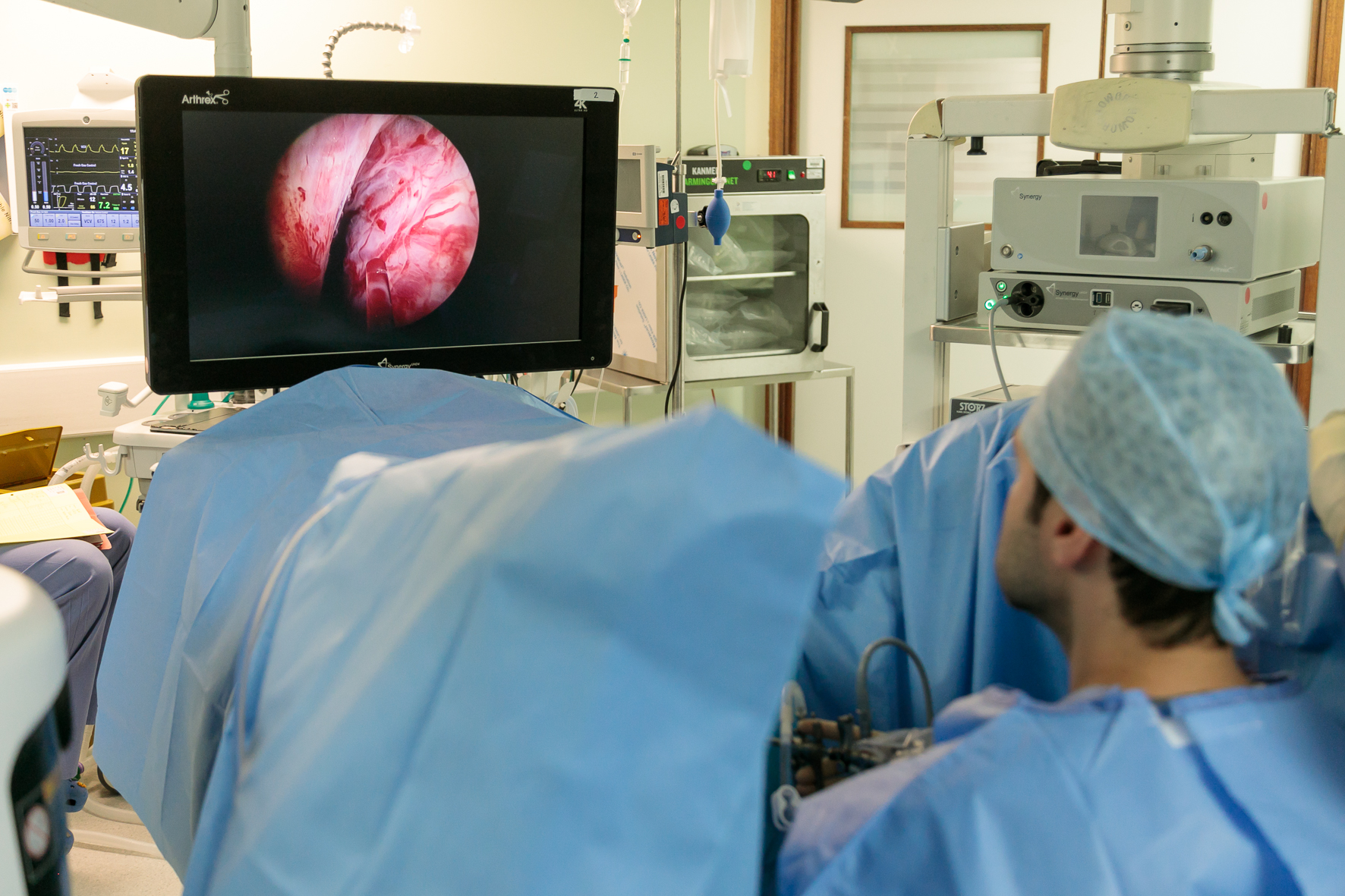
In the operating theatre



Book a consultation
To find out whether this procedure is appropriate for you, please contact the secretary.
Contact us